Three is a fun age.
Your child is becoming more independent, asking endless questions, pretending to be everyone from a doctor to a shopkeeper, and figuring out how things work by trying them again and again.
That last part is important. A three-year-old might build the same tower ten times, take it apart, and start all over again. It may look like they're simply playing, but they're learning about balance, size, shapes, movement and cause and effect along the way.
So when you're choosing educational toys for a 3-year-old, you don't necessarily need something complicated or packed with features. Often, the best toys are the ones your child can pick up, explore and eventually play with independently.
Here's what to look for.
What Are 3-Year-Olds Ready to Learn?
Every child develops differently, but three-year-olds are generally becoming more confident with:
- Hands-on problem solving: fitting, sorting, stacking and matching become more interesting as their coordination improves.
- Short periods of focused play: some children may happily concentrate for 10–15 minutes, while others move on much sooner. That's perfectly normal.
- Repetition: doing the same activity again isn't necessarily a sign of boredom. Repetition helps children practise and master new skills.
- Pretend play: playing doctor, cooking dinner or fixing a toy car gives children opportunities to use language, imagination and social skills.
- Independent play: children are gradually becoming more comfortable exploring toys without an adult showing them what to do every step of the way.
The key is to offer toys that are challenging enough to be interesting without being so difficult that your child gives up.
1. Chunky Puzzles and Shape Sorters
Puzzles are a classic choice for three-year-olds because they combine several skills in one simple activity.
Picking up and positioning pieces works the hands and fingers, while matching shapes and pictures encourages visual thinking and problem-solving.
For younger or less experienced puzzlers, chunky wooden puzzles and simple shape puzzles are a good place to start. As your child's confidence grows, you can gradually introduce puzzles with more pieces.
ToyKraftt's Next Puzzles range is designed for children in the 3–5 age group, making it a useful option as children move from very simple puzzles towards more challenging ones.
2. Stacking and Nesting Toys
Stacking rings, nesting cups and similar toys may look simple, but there's plenty going on.
Your child has to work out which piece is bigger, which one fits inside another and what happens when the order changes.
And, of course, knocking everything down and starting again is often half the fun.
These toys are particularly good because there's no single "right" way to play with them. Children can experiment at their own pace.
3. Pretend-Play Sets
Three is a wonderful age for pretend play.
A toy kitchen can become a restaurant. A doctor's kit can turn your living room into a clinic. A few toy tools can lead to an afternoon spent "repairing" everything in sight.
Pretend play encourages children to use language, imitate familiar situations and create their own stories.
You don't need a huge set with dozens of accessories either. Sometimes a few well-chosen pieces give children more freedom to decide what happens next.
4. Large Building Blocks
Building blocks are another toy that can grow with your child.
At first, your child might simply stack a few blocks. Soon, they may start building houses, towers, bridges or whatever happens to be in their imagination that day.
Along the way, they're learning about balance, size, space and cause and effect.
For three-year-olds, choose blocks that are easy for small hands to grip and are appropriate for the manufacturer's recommended age.
5. Simple Art and Craft Activities
Don't worry if your three-year-old's "masterpiece" looks like a collection of random lines and stickers.
That's not really the point.
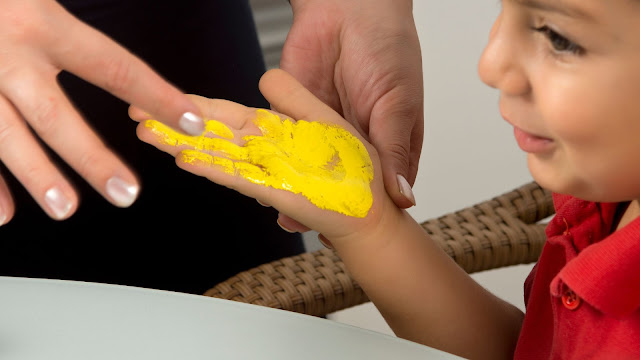
Gripping a crayon, pressing a sticker into place, spreading paint or working with sand all give children opportunities to practise hand control and coordination.
Simple, guided craft activities can be especially useful because they give children somewhere to start while still leaving room for creativity.
ToyKraftt's Finger Painting and Sand Art kits are designed for young children and offer a relatively simple way to introduce structured creative play.
And yes, choosing an activity that doesn't leave your entire house covered in glitter is a perfectly valid consideration for parents!
6. Simple Matching and Memory Games
You don't need a complicated board game to introduce a three-year-old to games.
Simple picture-matching activities or memory games using just a few pairs can introduce children to matching, remembering, taking turns and following simple rules.
Start small. If the game is too difficult, simplify it rather than expecting your child to sit through the whole thing.
The goal at this age is to make playing feel enjoyable — not like another lesson.
How Do You Know If a Toy Is Actually Educational?
The word "educational" appears on an awful lot of toy packaging.
But you don't have to take the label at face value.
Before buying, ask yourself:
Can my child actually use it independently?
A toy doesn't have to be completely independent, but your child should eventually be able to explore it without needing constant instructions.
Can it be played with in more than one way?
Open-ended toys tend to stay interesting for longer because children can change how they use them.
Is it challenging without being frustrating?
The right toy should give your child a chance to succeed while still offering something new to figure out.
Will my child want to use it again?
This is probably the simplest test of all. If a toy gets picked up repeatedly, it's doing something right.
Is it appropriate for my child's current abilities?
Age recommendations are useful, but children develop at different rates. Consider your child's coordination, interests and experience as well.
What Comes Next?
As your child approaches four and five, you can gradually introduce toys and games that require more steps, more concentration and more complicated problem-solving.
ToyKraftt's Next Puzzles, Finger Painting and Sand Art ranges can provide a starting point for younger preschoolers. As children become more confident, the Magnalogix range — including games such as Pen Them Up and Ace Detective — offers more challenging logic-based activities.
The important thing is not to rush to the next level. A toy that your child enjoys mastering today is often more valuable than one that is supposed to be "advanced" for their age.
The Best Educational Toy? The One They Actually Play With.
It's easy to get carried away when shopping for educational toys.
We look at the packaging, the list of skills, the recommended age and all the clever features.
But watch what happens after you bring the toy home.
Does your child keep coming back to it? Do they invent their own ways of using it? Do they ask to play again?
If the answer is yes, you've probably found a good toy.
At three, learning doesn't need to look like learning. Give children something they can touch, build, solve, create and pretend with — and let them take it from there.
Explore ToyKraftt's full range →
Frequently Asked Questions
What are the best educational toys for a 3-year-old?
Chunky puzzles, shape sorters, building blocks, stacking toys, pretend-play sets, simple craft activities and basic matching games are all good options. The best choice depends on your child's interests and current abilities.
How many puzzle pieces should a 3-year-old have?
There's no single number that works for every three-year-old. Some children are comfortable with simple 4–12-piece puzzles, while others may be ready for more. Start with a puzzle your child can complete with some success and increase the difficulty as their skills improve.
Are screen-free toys better for 3-year-olds?
Hands-on toys provide opportunities to physically manipulate objects, build with their hands and explore real-world cause and effect. That makes them particularly useful for developing physical and problem-solving skills. Digital activities can have a place too, but they don't need to replace hands-on play.
What are good Montessori-style toys for a 3-year-old?
Simple Montessori-inspired activities such as sorting, stacking, matching, practical-life activities and hands-on puzzles can work well for this age. Look for activities that allow children to explore and practice skills independently rather than simply pressing buttons for an answer.
When should a child move to more advanced puzzles?
Move up when your child consistently finds their current puzzles easy and completes them without much help. Rather than choosing based purely on age, watch how your child responds to the challenge. If they're excited to try again, you can increase the difficulty. If they're frustrated and walking away, try something simpler.


Comments
Post a Comment